
Looking for a spellbinding way to teach kids? Dive into the magic of Aesop’s Fables Retold: Morals and Magical Moments for Minors, 1. Donald Darwin breathes new life into classic fantasy books with mythology making every lesson unforgettable for young readers. Every story opens with punchy quotes and wraps up with extra morals; ensuring kids not only enjoy the tales but truly remember their lessons. This book is a must-have for teachers, parents, and anyone eager to spark meaningful conversations with children.
Aesop’s Fables Retold: Morals and Magical Moments for Minors, 1 is much more than simple stories; these fantasy books with mythology are ancient vehicles of wisdom and teaching, specially designed for young minds. Through concise narratives and memorable characters, often animals that act like people, fables manage to convey profound lessons about life, morality, and human behavior in a way that is accessible and entertaining for children.
Aesop’s Fables Retold: Morals and Magical Moments for Minors, 1— an inspiration engine for kids!
The fantasy books with mythology, written by Donald Darwin, explores childhood fears, harmonious behavior, the ability to accept and adapt to the real world, courage, imagination, and the affections needed to move forward. With memorable quotes and expanded morals, these tales go beyond fun, helping adults and children dive into big ideas together. Get ready for reading time that’s as magical as it is meaningful. Growing up, in short.
Are classic fantasy books with mythology still relevant for 21st-century children?
Classic fables, fantasy books with mythology areshort stories featuring anthropomorphized animals that convey a moral lesson, which have stood the test of time and remain an invaluable tool for educating and entertaining children. Despite the passage of centuries, these stories continue to captivate youngsters and teach them important lessons about life, morality, and human behavior.
8 Reasons To Learn Values With Aesop’s Fables Retold:
Aesop’sFables are one of humanity’s oldest oral storytelling genres. In fact, the word fable comes from the verb “to speak,” and specifically, it means stories to be told. That’s why, for centuries and even today, values have been taught through fables.
- All share the same characteristics.
Fantasy books with mythology are short stories, designed to be told orally, with a final lesson, and they form part of the collective imagination in all cultures. The world keeps changing, but they remain!
How many times have you heard about the importance of values education?
It’s not easy, and both at home and at school, the safest path isn’t always the most direct. In other words, it’s not enough to simply tell children what’s right and wrong from a young age; they need to see and experience it.
- The narrative element is key to learning values through fables.
Through a simple structure of introduction, conflict, and resolution, with a final lesson, young children identify with the characters’ problems, which prompts them to reflect when the final moral is revealed.
- Communication and bonding
One of the reasons values are internalized through fables is the strengthening of bonds and communication between generations that they allow. Aesop’s Fables should be told, spoken, shared… and all these actions help strengthen relationships with young children.
- Personification of values
Values are abstract concepts and, as we mentioned, are not easy to transmit directly. In fact, young children learn them by observing actions and words and repeating them. Aesop’s Fables Retold: Morals and Magical Moments for Minors, 1 helps us identify these values in specific actions and characters, enabling us to internalize them.
- Empathy in Aesop’s Fables
Empathy involves active listening, understanding, emotional support, and the ability to see situations from both cognitive and emotional perspectives. Aesop’s Fables illustrate empathy by showing characters who recognize and respond to each other’s feelings and needs.
- Fostering imagination
Imagination is the ability we have to perceive objects or people that are not present. In children, this faculty is very important for their proper development, as it will provide them with a range of very positive abilities throughout their lives. Often, we think that having too much imagination can be a negative thing; however, this is not the case at all. On the contrary, having a well-developed imagination makes it easier and faster for many abilities and skills to develop .
- Love of books
An intimate and fun relationship with books in the early years, like the one fostered by fables, shapes life far more than we realize. If books have been a refuge or a source of fun and learning, they will continue to be so throughout adulthood.
- Memory Stimulation
The very characteristics of Aesop’s Fables Retold: Morals and Magical Moments for Minors, 1, which are short and well-structured stories, are designed to be remembered and passed down from generation to generation. Therefore, they will organize and stimulate young children’s memory through their emotional experiences, so that they can build on this foundation for all other learning.
Aesop’s Fables Retold: Morals and Magical Moments for Minors, 1: Learning Values with Fables
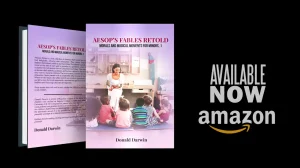
If we add a fun and beneficial ingredient, like a puzzle… we have top-notch educational material! Aesop’s Fables Retold: Morals and Magical Moments for Minors, 1 by Donald Darwin, is the most fun way to learn values with fables.
Ready to bring timeless wisdom to your child’s world? Grab your copy of one of the classic fantasy books with mythology: Aesop’s Fables Retold: Morals and Magical Moments for Minors, 1 today and start a journey of magical learning together!